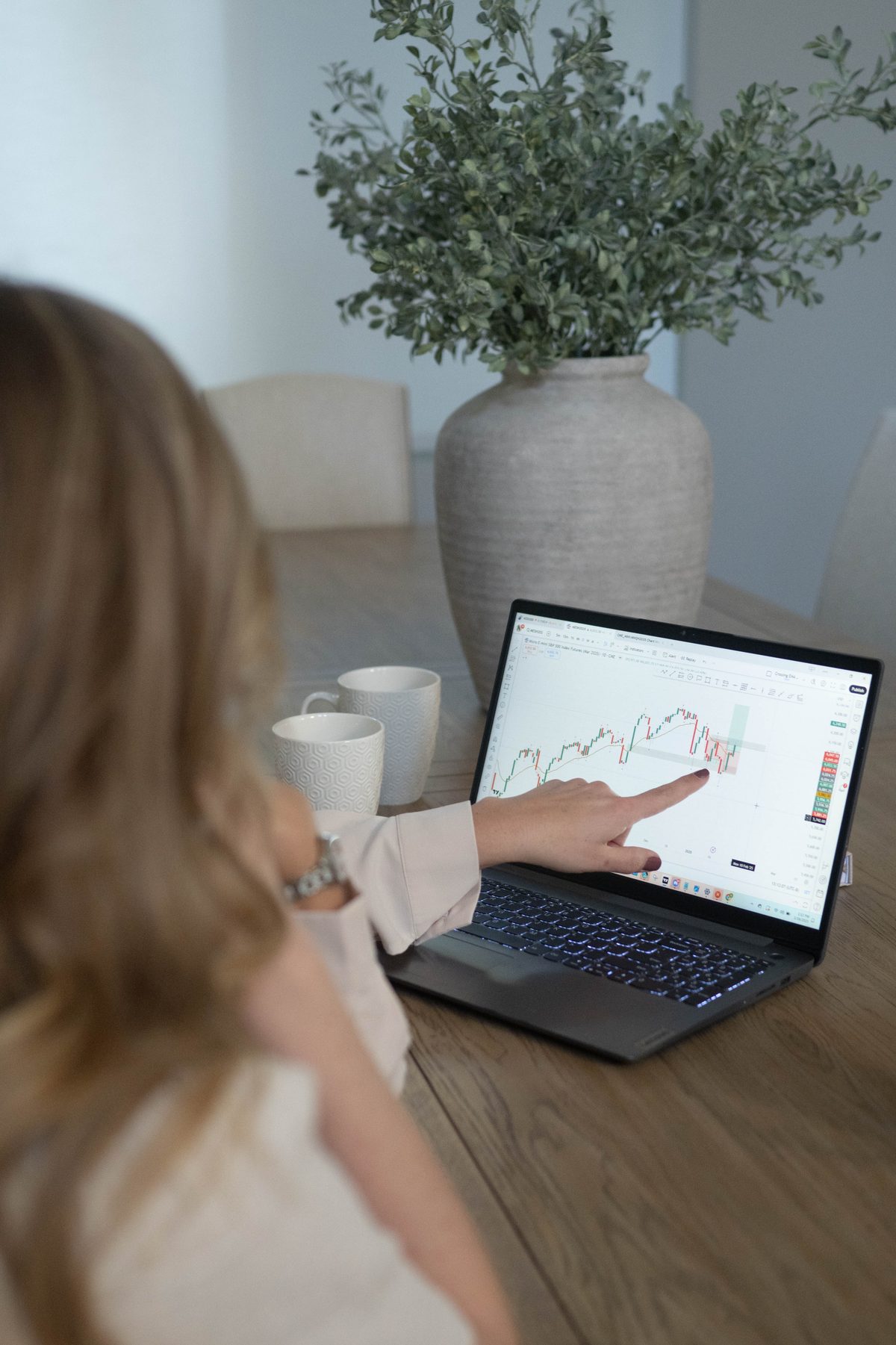
You're opening a chart for the first time, and honestly? It's a bit intimidating. All those candles, all those lines, all that movement happening in real time. You're wondering: where do I even start? That's exactly where I was once. And that's exactly why I'm walking you through this today — not as theory, but as the actual steps we use in every beginner class at TFW.
How to Start Forex Trading: Your First Week
Let me be clear from the start: you're not going to be trading in your first week. You're not even going to be looking at live money yet. What you're going to do is get set up. And I mean really set up — the right broker, the right platform, the right mindset before you touch a single real trade.
Here's what week one looks like in a beginner class when someone says, "Okay, I'm brand new. Where do I literally start today?"
First, we choose a broker. I get asked this constantly: "What broker do you use?" The answer is honest — I personally trade futures on TradeStation and forex on Forex.com. But the real answer is this: you need a broker that's regulated in your country. FCA if you're in the UK. CFTC or NFA if you're in the US. That's non-negotiable.
"When someone new joins, we don't start with strategy. We start with: can you open a chart? Can you place a practice order? Do you know how to set a stop loss? Get comfortable with the actual mechanical part before you worry about whether the trade is right."
Once you've chosen your broker, you open a demo account immediately. Not a real account. Demo. That's your sandbox. You get £10,000 in fake money, and you're going to learn how this platform actually works — not how it works in videos, but how it works for you, with your hands on the keyboard, your eyes on your screen.
Setting Up Your First Trading Chart
So you've got your broker. You've logged into demo. Now comes the part that actually matters for a beginner: setting up your chart so you can start learning to read it.
In my beginner sessions, I share my screen and walk through this exact step. You go to indicators. You'll see currency pairs on the right side of the screen — that's your foreign exchange list. You're looking at pairs like EUR/USD, GBP/USD, because these are the most liquid. Most active. Easiest to get in and out of as a beginner.
Then you add moving averages — specifically, the ones we teach in TFW. A 10-minute EMA and a 15-minute EMA on a 3-minute timeframe. Sounds complicated? It's not. It's literally: go to indicators, type "exponential moving average," add two of them, set the timeframes, and suddenly you're watching the exact same chart our traders are watching.
"I was afraid. I doubted myself. I had limited thoughts about financial abundance. But I kept going — watched and rewatched the class recordings, joined every new session offered, and committed myself to the process. It took a full year in demo before I was ready to trade live."
Once your chart is set up, here's what happens next: you watch. You don't trade. You literally just watch price move. Notice when it touches that moving average. Notice what the candle shapes look like. Notice the pattern — does price bounce here consistently? Does it break through? What happens the next time you see this setup?
This is boring work. It's supposed to be. The women who skip this and jump straight to trading are the ones who blow up accounts six weeks in.
What we teach: Your chart is your classroom. Before you place your first practice trade, you should spend at least 1-2 weeks just watching. Open your demo broker on paper-trading on TradingView. Put those EMAs on your chart. Watch Bitcoin, crypto pairs, or forex — it doesn't matter. Learn to see the pattern first.
Your First Practice Trades in Demo
After you've been watching for a week or two — and I mean really watching, not just scrolling past — you're ready to place your first practice trade. And here's the thing: we're not trying to make money yet. We're trying to understand the mechanics.
You're going to wait for one specific thing: a candle that touches your moving average. That's your entry. Your stop loss? Set it just below the candle that triggered the trade. Your take profit? Set it at 1.5 times what you risked — a 1:1.5 risk-to-reward ratio. That's it.
Place the trade. Watch what happens. Win or lose, it doesn't matter because this is demo money. What matters is: did you understand why you entered? Can you explain it? Did you follow your own rules?
Do this 20-30 times before you think about anything else. The women in our community who do this are the ones who still have accounts three years later. The women who skip it are the ones posting "I blew my account" in week four.
"The market doesn't care how smart you are. It cares if you follow a plan. Demo trading teaches you that plan at zero cost. It's literally free education if you treat it seriously."
Common Beginner Mistakes and How to Avoid Them
I've watched hundreds of women come through our beginner classes. The mistakes repeat. And they're almost never about the setup — they're about discipline.
Mistake 1: Skipping demo. You think demo is beneath you. You've watched enough YouTube, you understand charts, you're ready to go live. Then you lose £500 in two days and disappear from the community. Don't do this. The women who spend 8-12 weeks in serious demo trading are the ones who build actual accounts.
Mistake 2: Trading too many pairs. You want to catch every opportunity. You're watching EUR/USD, GBP/USD, AUD/USD, NZD/USD, all the crypto pairs. You're overwhelmed. You miss setups you should be in because you're scattered across eight charts. Pick 2-3 pairs. Know them deeply. You can expand later.
Mistake 3: Not keeping a journal. Every single trade goes in a journal. What time did you enter? What was the setup? Why did you take it? What happened? Did the trade go the way you expected? If not, why? After 50 trades, patterns emerge. You'll see: "I lose every Friday because I'm impatient" or "I over-risk when I'm tired." That's gold. That's the self-awareness that separates traders who survive from traders who don't.
Mistake 4: Treating demo casually. You place trades for fun. You hold them forever because "it's not real money so it doesn't matter." Then you go live and suddenly you're terrified because demo taught you nothing about decision-making. Trade demo exactly like you trade live. Every trade matters. Follow your plan. Respect your risk.
Mistake 5: Going live too soon. You see a few winning trades and think you're ready. You open a live account with £1,000, and within a week, it's £200. You feel sick. You quit. That would have been prevented by one more month in demo — just one more month of evidence that your plan actually works.
"After nearly ten trades and slipping deeper into frustration and self-doubt, this first small win felt like a ray of light breaking through. It reminded me that even the smallest glow can guide you forward. I kept showing up, and that made all the difference."
Your 90-Day Game Plan
Forget 30 days. Forget 60 days. Here's the realistic timeline:
Weeks 1-2: Watch and Learn — Chart is set up. You're on demo. You're not placing trades yet. You're watching how price behaves. How many times does it bounce off support? What does it look like when it breaks through? This boredom is the foundation.
Weeks 3-6: Demo Trading Begins — You're placing trades following your setup. One candle touching the EMA. Simple. You're only looking for setups that match exactly what you've been taught. Most of your "trades" won't be entered because they don't quite match. That's correct. You're building selectivity.
Weeks 7-12: Consistency and Journaling — You've got 40+ demo trades under your belt. You're journaling every single one. Your account is showing whether your system works when you actually follow it. You're learning what happens emotionally when you take losses. You're building confidence through repetition.
By the end of week 12, if you're consistently profitable on demo and you're following your plan without deviation, you're ready to consider live. Small live. £500 to £1,000. But you're ready.
The traders who rush this timeline are back in my inbox in month two asking what went wrong. The traders who commit to it are the ones posting "I just passed my first funded account" six months later.
What Actually Separates New Traders Who Succeed
It's not intelligence. It's not luck. It's not having found the "secret setup." It's consistency and honesty.
The women who succeed come to the beginner classes and actually do what we teach. They open demo. They watch. They trade the plan. They journal. They come back week after week asking questions. They post their results — wins and losses — to the community. They don't pretend they know more than they do.
It's that simple and that unglamorous.
What we teach: Your first three months aren't about making money. They're about proving to yourself that you can follow a plan. Once you can do that consistently, in demo, with honest journaling, the door opens to live trading. But not before.
So here's where you start today: find a regulated broker. Open a demo account. Set up your chart with the moving averages we teach. And then spend the next two weeks just watching. That's it. That's week one. No trading. Just watching.
The first real trade will come. And when it does, you'll be ready — because you won't be making it from emotion or hype. You'll be making it from a plan you've watched work fifty times already.
That's how trading actually starts.